
Essential details
MOQ:100
Shipping:Express delivery, air freight, sea freight
Specification Number:3001
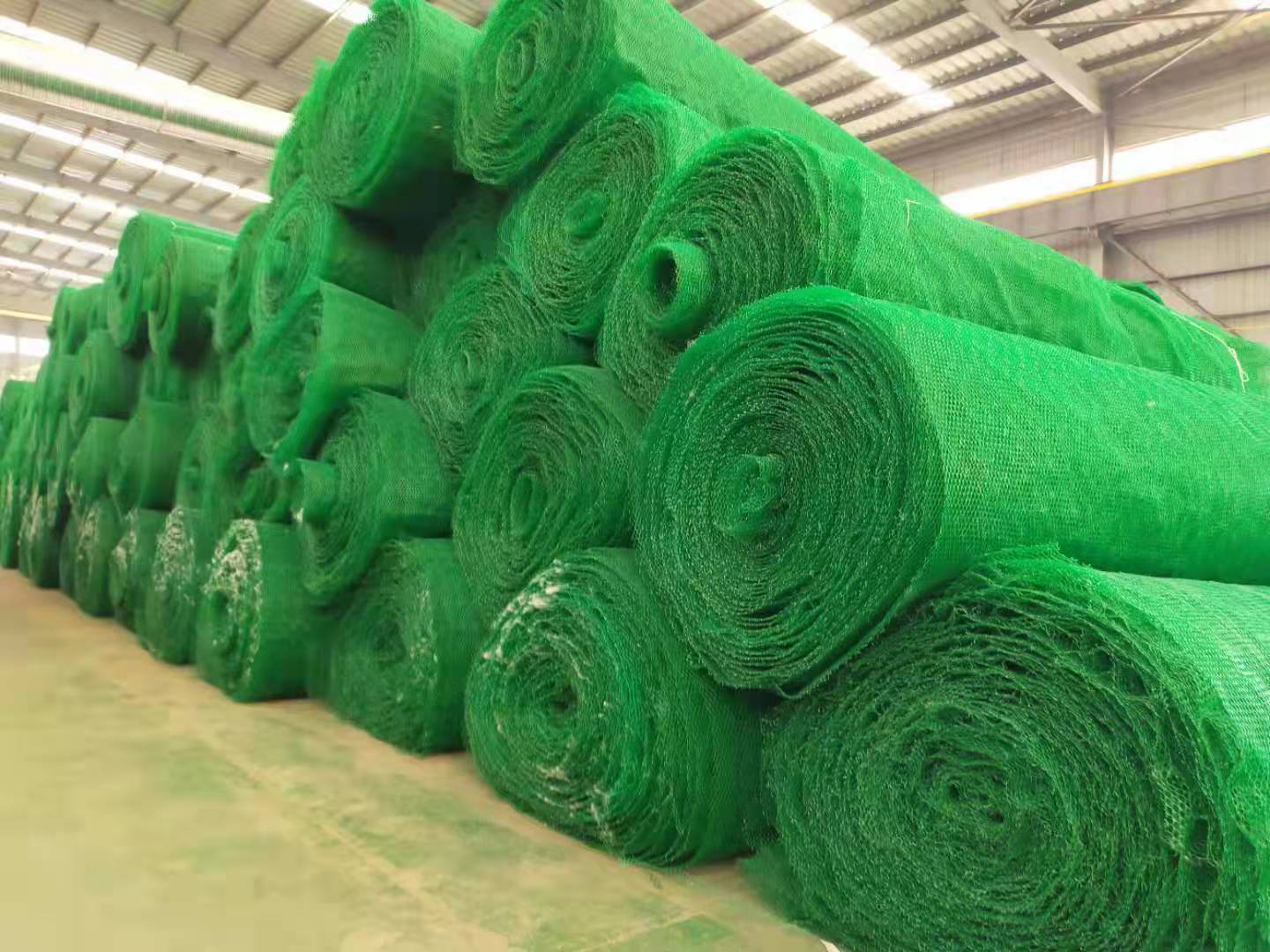
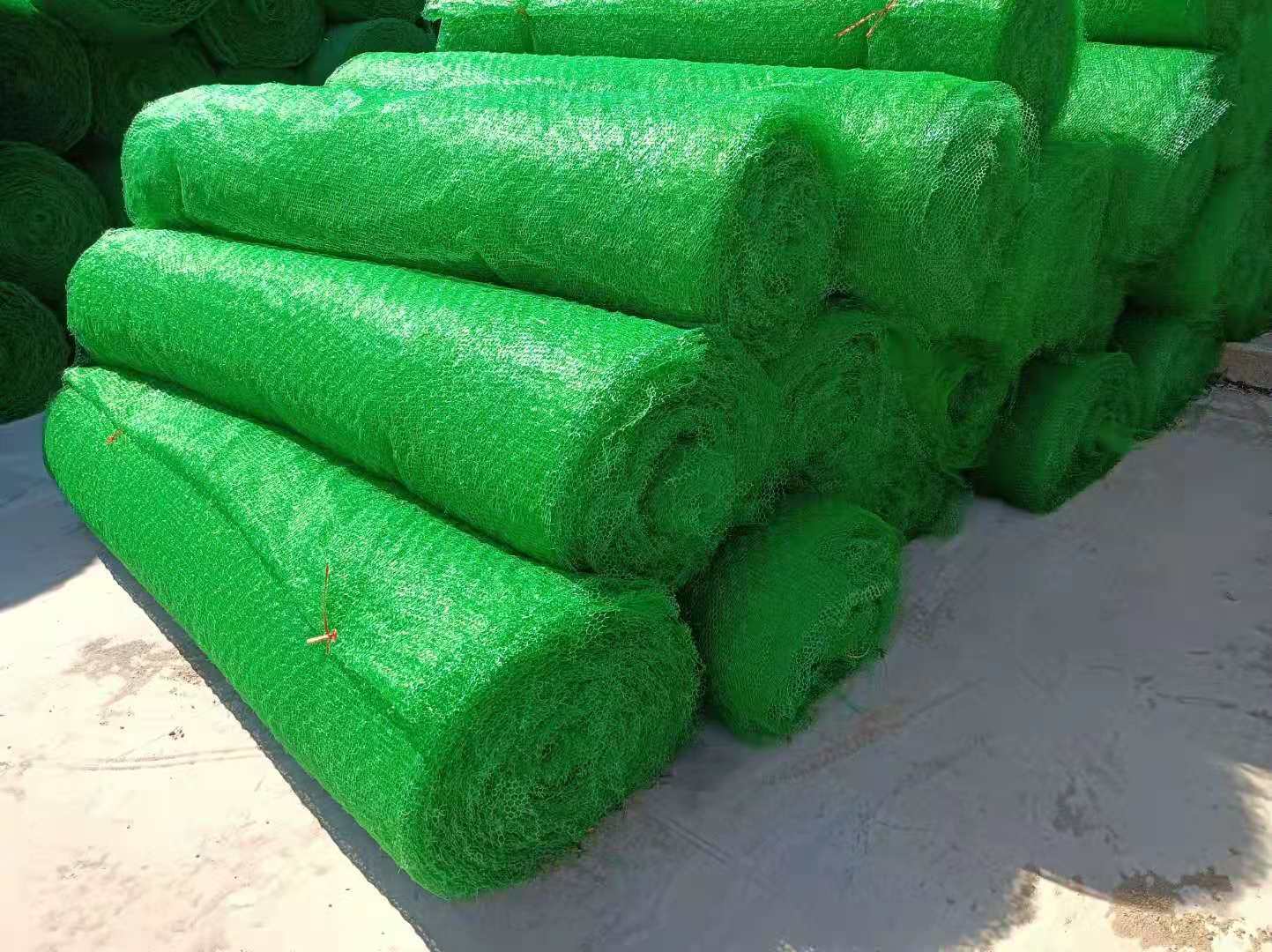
Package Description:In roll
Product Introduction
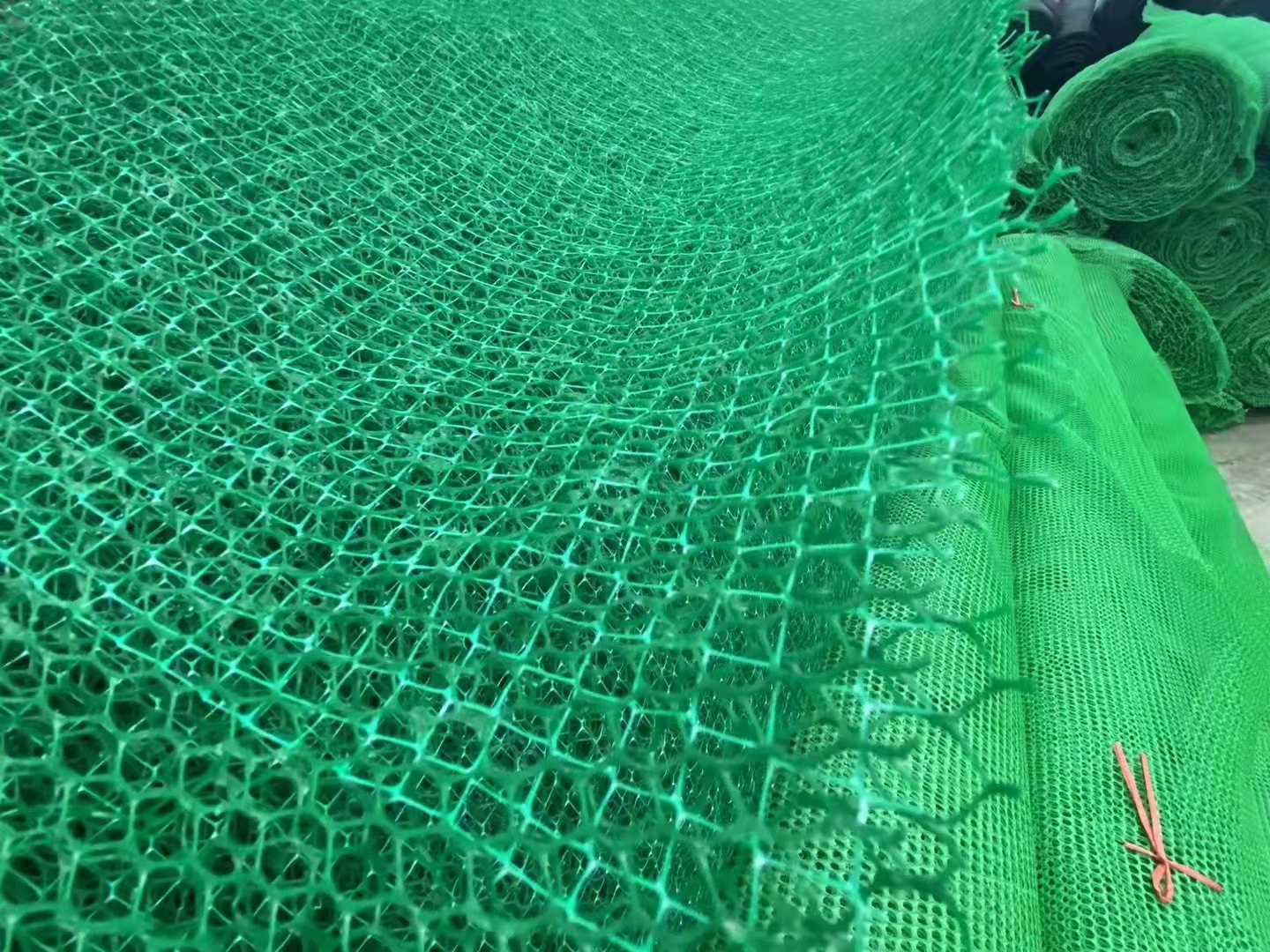
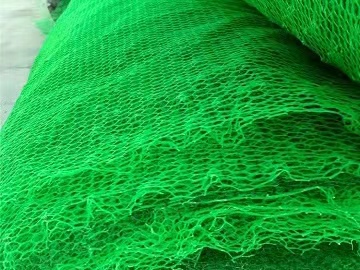
Three-Dimensional Vvegetation Geonet Isdesigned for grass seeding and soil stabilization, features a luffa-like mesh structure with a loose, flexible texture. It provides 90% of its surface area for filling with soil, gravel, and fine stones, allowing plant roots to penetrate and grow in a comfortable, orderly, and balanced manner. The mature turf creates a strong bond between the mulch mat, grass, and soil surface. With root systems extending 30–40 cm below the ground level, it forms a robust green composite protective layer that enhances environmental sustainability.
Product Application:
1. Before the turf has fully grown, the land surface can be protected from erosion by wind and rain.
2. It can firmly maintain an even distribution of grass seeds on the slope surface, preventing erosion by wind and rain.
3. Black net pads can absorb a large amount of thermal energy, increase soil moisture, promote seed germination, and extend the plant growth period.
4. Due to surface roughness, wind and water flow generate numerous vortices on the net pad surface, thereby exerting an energy dissipation effect that promotes sedimentation of carried materials within the net pad.
5. The composite protective layer formed after plant growth can withstand high water levels and high flow rates (able to endure 3–4 m/s within two days and 5–6 m/s within 4–5 hours).
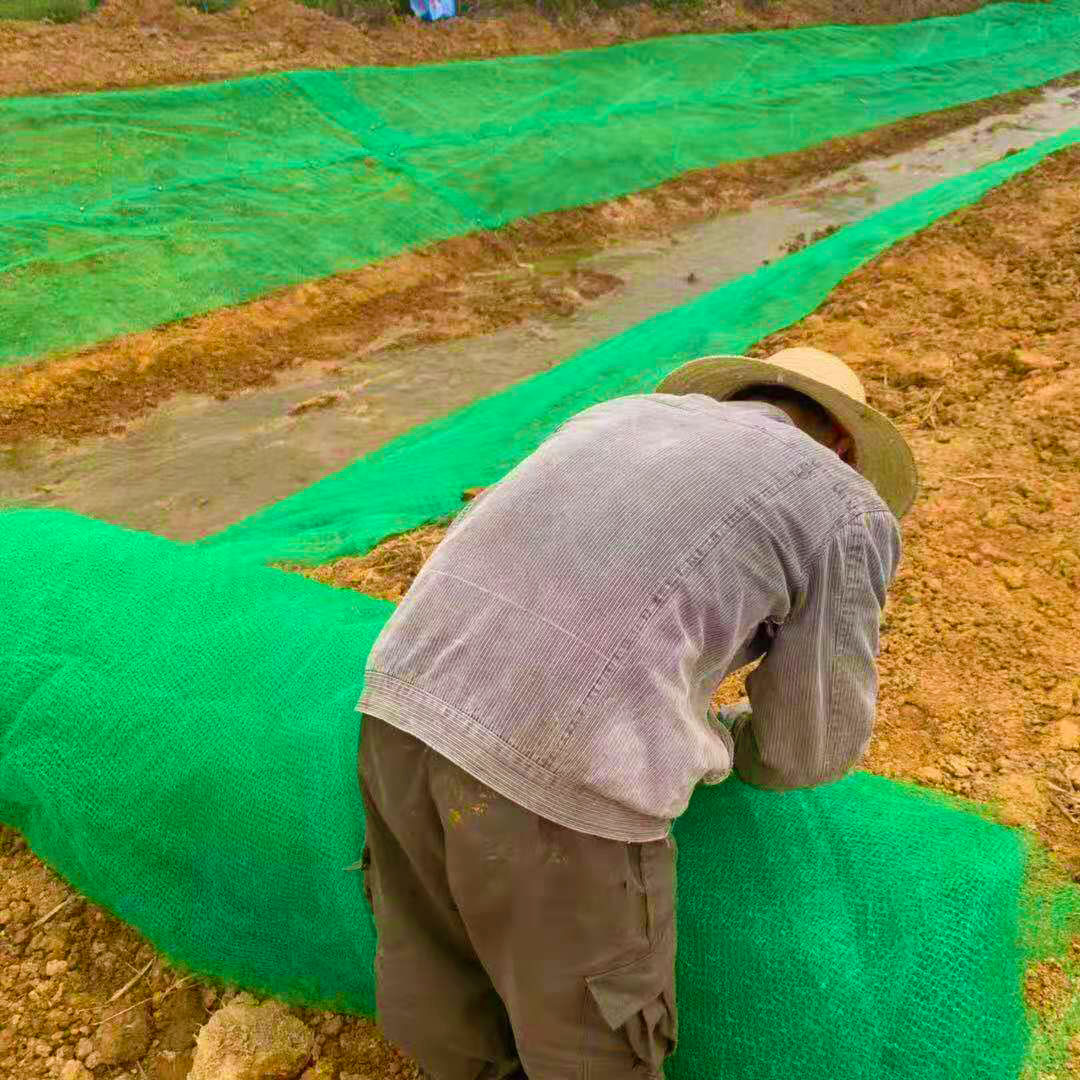
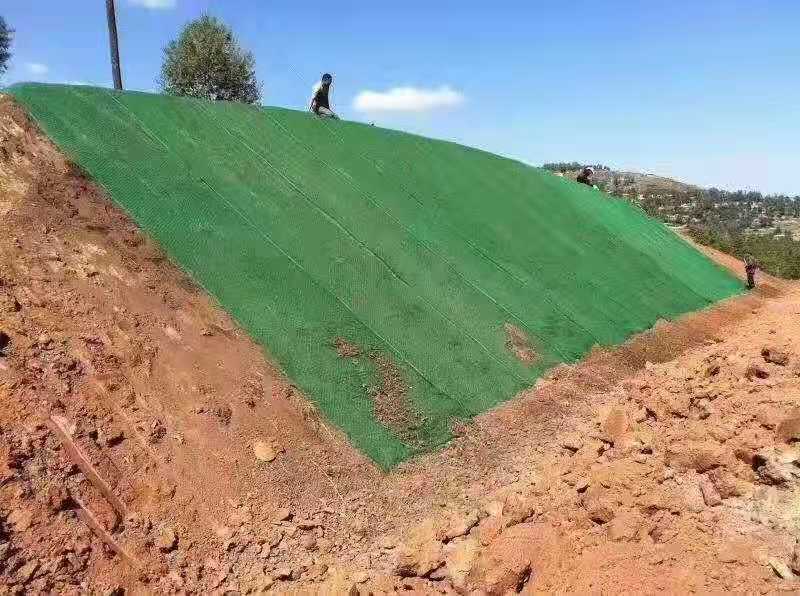
6. It can replace permanent slope protection materials such as concrete, asphalt, and rubble, and is used for slope protection on highways, railways, waterways, embankments, and slopes.
7. It can significantly reduce construction costs, being only 1/7 of the cost for C15 concrete and dry-laid block stone slope protection, and 1/8 of the cost for mortar-laid block stone.
8. After being laid on sandy soil surfaces, it can prevent the movement of sand dunes, significantly increase surface roughness, enhance surface sedimentation, alter surface physicochemical properties, and improve the ecological environment in localized areas.
1. Before the turf has fully grown, the land surface can be protected from erosion by wind and rain.
2. It can firmly maintain an even distribution of grass seeds on the slope surface, preventing erosion by wind and rain.
3. Black net pads can absorb a large amount of thermal energy, increase soil moisture, promote seed germination, and extend the plant growth period.
4. Due to surface roughness, wind and water flow generate numerous vortices on the net pad surface, thereby exerting an energy dissipation effect that promotes sedimentation of carried materials within the net pad.
5. The composite protective layer formed after plant growth can withstand high water levels and high flow rates (able to endure 3–4 m/s within two days and 5–6 m/s within 4–5 hours).
6. It can replace permanent slope protection materials such as concrete, asphalt, and rubble, and is used for slope protection on highways, railways, waterways, embankments, and slopes.
7. It can significantly reduce construction costs, being only 1/7 of the cost for C15 concrete and dry-laid block stone slope protection, and 1/8 of the cost for mortar-laid block stone.
8. After being laid on sandy soil surfaces, it can prevent the movement of sand dunes, significantly increase surface roughness, enhance surface sedimentation, alter surface physicochemical properties, and improve the ecological environment in localized areas.
